
How Zinc-Ion Breakthroughs Are Rewriting Battery Assumptions
For investors, founders and engineers, zinc is worth watching because it challenges comfortable assumptions.
For decades, battery engineers repeated the same warning. If you charge too fast, you kill the battery. Push high currents through a lithium-ion cell and metallic “dendrites” can grow like tiny spikes and under certain conditions, they can pierce the separator and short-circuit the pack. Fast chargers often involve a trade-off between convenience and a faster degradation risk if not managed well.
Recent work on zinc-ion batteries (ZIBs) starts to bend that story, at least in the lab. In carefully designed aqueous zinc systems, high-speed charging can favour smoother zinc growth under specific conditions instead of dendrites.
On the cathode side, new architectures show how long-standing structural weaknesses can be turned into greater stability, reaching thousands of cycles in test cells while still using inexpensive, common materials.
Taken together, these advances show how much performance is still hidden inside “old” chemistries. Instead of betting only on exotic elements, researchers are learning to re-engineer how familiar materials deposit, distort and recover inside a working cell.
Zinc-Ion 101: Why Zinc Is Back in the Spotlight
Zinc-ion batteries are not aiming to replace the lithium-ion pouch in your phone. Their likely niche is safer, lower-cost storage where weight is less critical: grid-scale batteries for solar and wind, backup power for hospitals and data centres and possibly robust packs for two and three-wheelers or urban delivery fleets over time.
Zinc has a few clear advantages here:
- It is abundant and already produced at a large scale, which lowers raw material risk compared with lithium or cobalt.
- Many ZIB research designs use water-based electrolytes, which are much less flammable than typical lithium-ion solvents.
- Zinc metal can act as a high-capacity anode with a potentially lower flammability and thermal-runaway risk when paired with aqueous electrolytes, compared with conventional lithium-ion chemistries, though zinc systems still face their own failure modes.
Until recently, two problems held ZIBs back:
- Zinc anodes that grow rough surfaces and dendrites.
- Manganese oxide cathodes that crack, dissolve and lose capacity.
Recent studies tackle both issues at the research-cell level.
The Fast-Charging Paradox: When Speed Helps Instead of Hurts
In lithium-ion, fast charging often makes things worse. Uneven metal plating builds dendrites and stresses the cell. For a long time, people assumed zinc metal anodes would behave the same way.
A Georgia Tech team, including Hailong Chen tested this in an aqueous zinc setup. In a 2025 lab study, they plated zinc onto a copper surface at different currents and watched the metal grow in real time.
- At low current, zinc grew in messy, tree-like shapes. This kind of roughness tends to lead to dendrites.
- At higher current, zinc formed dense, flat layers that joined into a smoother coating.
In some tests, high current densities were observed to produce smoother, denser zinc layers than low currents, suggesting that appropriately designed high-rate steps might help improve surface morphology over time, rather than always making it worse.
That suggests that under the right electrolyte, substrate and geometry, fast charging can help “reset” the surface instead of only damaging it.
These are controlled experiments on small samples, not full commercial cells with separators, realistic cathodes and full battery management. They are not a ready-made “self-healing” recipe. But they do show that in zinc systems, slow is not always safer and fast is not always worse. Charging profiles can be a design tool, not just a constraint.
Cathode Comeback: Turning Flaws into Features
Most aqueous ZIBs use manganese oxide (MnO₂) cathodes. MnO₂ is cheap, common and has good capacity, but it usually dies early. In many conventional MnO₂ cathode designs, capacity often starts to fade relatively early as the structure twists and cracks (a Jahn–Teller effect), some manganese dissolves into the electrolyte and capacity drops.
In 2025, a team in Australia and the UK took a fresh approach. They built a MnO₂ cathode as a layered superlattice: thin sheets of manganese oxide stacked with conductive graphene.
The idea is simple: instead of fighting internal strain, line it up.
- When one part of the lattice wants to twist, its neighbours twist with it.
- Stress is shared across the structure instead of turning into random cracks.
- It behaves more like a flexible building designed for earthquakes than a rigid wall.
In zinc-ion test cells, this MnO₂/graphene cathode delivered around 160-170 mAh/g at high rates and kept working for more than 5,000 cycles, with much less manganese loss than plain MnO₂.
Again, this is lab-scale work, not a finished product. But it shows how smart structures can turn a known weakness into a source of stability, using familiar ingredients: manganese, carbon and water-based electrolytes.
Three Battery Myths To Revisit
Together, the anode and cathode breakthroughs challenge several entrenched beliefs in battery design, at least within the zinc-ion research space.
Myth 1: Fast charging always kills batteries.
In some zinc deposition experiments, high-rate charging can create smoother, denser metal layers and suppress dendrite formation. Under the right conditions, aggressive cycling can even improve surface structure. It is not a free pass for any fast charge, but it proves that current profiles are more flexible than we thought.
Myth 2: Structural flaws in cathode materials are always fatal.
The MnO₂/graphene superlattice shows that effects like the Jahn-Teller distortion can be managed and partly harnessed if the structure is designed to share strain instead of breaking under it.
Myth 3: Better batteries need exotic new elements.
These zinc-ion systems use zinc, manganese, carbon and water. The big gains come from microstructure and operating strategy, not from discovering a brand-new element.
From Lab Insights to Possible Applications
None of this means zinc-ion batteries will displace lithium-ion overnight. Each chemistry has its niche and today’s zinc-ion breakthroughs are still in the research phase.
Some plausible future roles if the lab results can be scaled:
Grid storage and backup
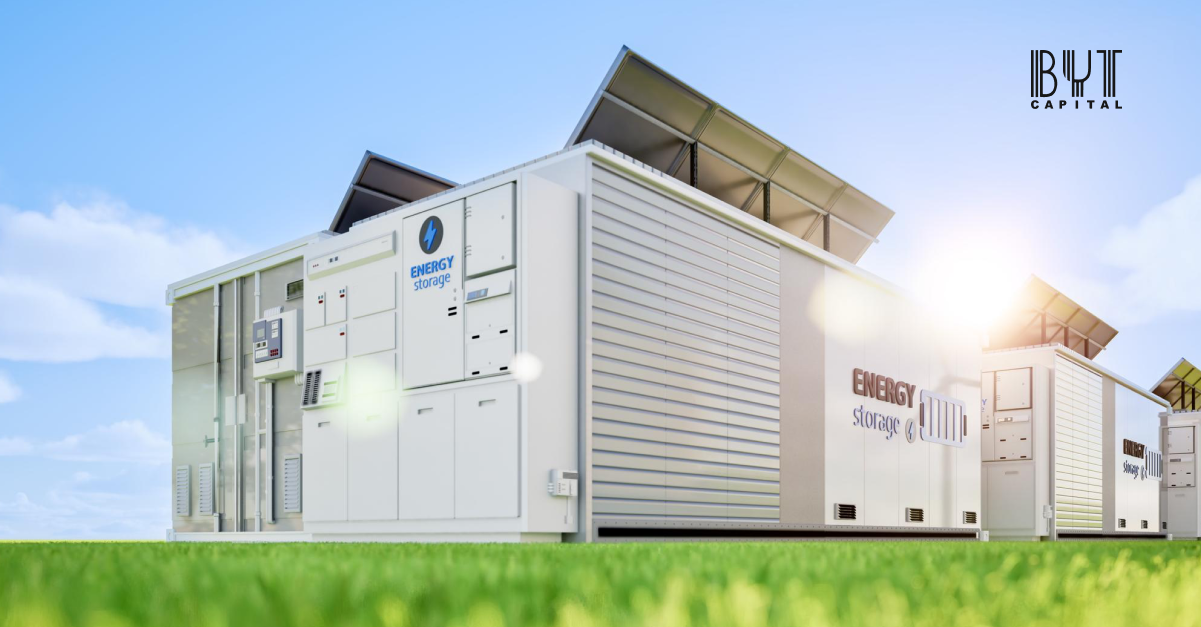
Aqueous electrolytes cut fire risk and zinc and manganese are widely available. If lab-level cycle life can be replicated in real packs, containerised zinc systems could sit next to solar farms and substations to smooth out supply.
Remote and high-safety environments
In microgrids, telecom towers or cold-chain setups, safety and serviceability can matter more than squeezing out every extra Wh/kg. Zinc’s safety profile could be attractive if the total cost and durability work out.
Short-range mobility
ZIBs are not ready for long-range passenger EVs. But for short-range use cases such as two- and three-wheelers, small delivery fleets or warehouse equipment, researchers and startups are exploring whether a safer, robust chemistry could eventually compete on total cost and reliability rather than on peak energy density.
To reach any of these roles, zinc-ion still has to overcome major hurdles: side reactions like hydrogen evolution and corrosion, scaling up cathode structures, making thick electrodes work well, dealing with calendar ageing and achieving competitive cost per kilowatt-hour.
What This Means for Builders, Investors and Policy
Zinc-ion research is a signal to widen the opportunity map, not a claim that “lithium is dead”. The core lesson is that battery performance depends as much on how you charge and structure materials as on what they are made of.
For engineers, this means thinking in terms of charging profiles and microstructure. Fast-charge pulses, if designed well, may help keep zinc surfaces smoother. Layered cathodes like MnO₂/graphene show that tuning interfaces and strain can make common materials last much longer.
For business and policy:
- Who it could serve: in the long run, utilities, hospitals, data centres, cold-chain operators, industrial parks and shorter-range fleets where safety and cost matter as much as energy density.
- What policy should do: support multiple chemistries, not only lithium, especially for stationary and resilience use cases.
- What research should focus on: deep, mechanism-level work (imaging, strain mapping, simulation) that leads directly to new protocols and designs that can be tested and scaled.
In short, if you build or fund energy storage, zinc-ion is not a sure bet yet, but it is now serious enough that you cannot ignore it.
Why This Matters Now
Battery technology shapes every part of the clean-energy transition. For years, progress has often looked incremental: a few percentage points more energy, a little better safety, a bit lower cost. Recent zinc-ion studies hint at a different pattern.
Fast charging as a potential tool for better morphology. Lattice distortions turned from a liability into a design parameter. Familiar elements rearranged to support thousands of high-rate cycles in lab cells. These are qualitative shifts in how we think about ageing, durability and design.
For investors, founders and engineers, zinc is worth watching because it challenges comfortable assumptions. It shows that there is still enormous room to improve how we use well-known materials before we exhaust their potential.
The future of batteries may not belong to a single chemistry. It will belong to those who learn how to turn constraints into features, time into an ally and even “old” metals like zinc into platforms for the next generation of clean, resilient energy systems.

Get a front-row seat to India’s deep-tech innovation
Receive the best of BYT’s analysis and updates, straight to your inbox