
How Software-Defined Vehicle Development Is Changing the Auto Industry
The SDV transition is still underway and adoption will vary across markets and manufacturers.
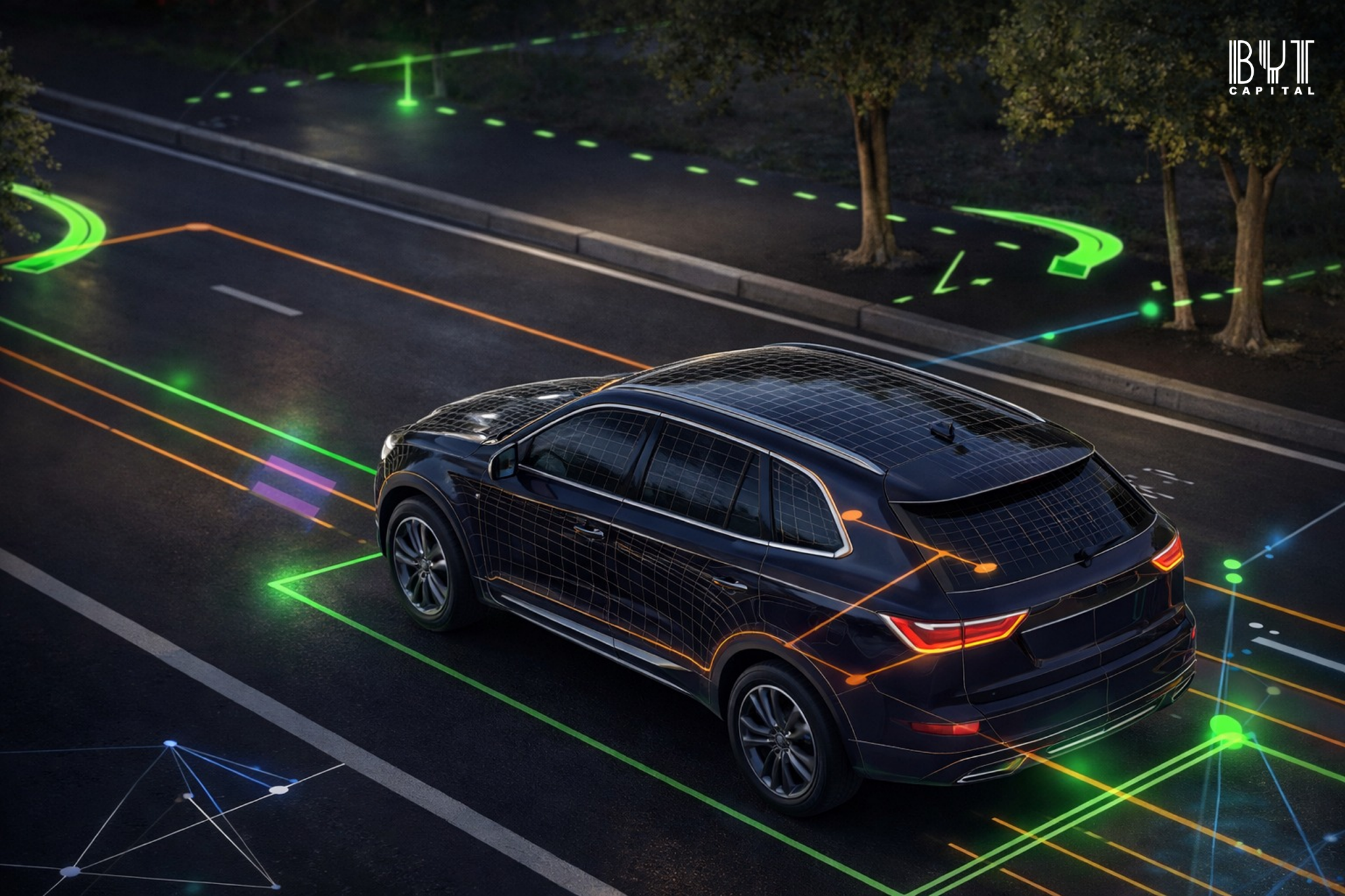
Software-defined vehicle development is revolutionizing the auto industry by shifting value from hardware-centric design toward updatable, software-led architectures. This transformation enables continuous innovation, new revenue streams and enhanced user experiences through over-the-air updates and artificial intelligence integration.
What Are Software-defined Vehicles?
Traditional vehicles rely on numerous electronic control units (ECUs), often numbering around 100 in complex vehicles, with each handling specific functions such as braking or infotainment. This creates substantial integration complexity across hardware, software and wiring.
In contrast, software-defined vehicles (SDVs) centralize computing power into high-performance computers and zonal controllers. This helps consolidate many distributed ECUs into a smaller set of central and zonal controllers, while enabling software to orchestrate functions across the vehicle.
This zonal architecture divides the vehicle into physical zones, such as front, rear, left and right. Each zone is linked to central compute platforms. Together, these platforms create a more efficient foundation for advanced driver assistance, digital cockpit systems, connectivity and future AI applications.
At CES 2026, Qualcomm and QNX showcased platforms aligned with this architectural direction. This reinforced the industry’s continued push toward more production-ready SDV platforms.
The Shift from Hardware to Software
Historically, major vehicle improvements were tied to long hardware-led refresh cycles. SDVs decouple software from hardware, enabling OTA updates that can add or improve features after sale, much like software updates changed the lifecycle of other connected products.
UNECE Regulation No. 156 has also made structured software update management increasingly important for connected vehicles.
CES 2026 highlighted this shift toward industrialization. Volkswagen Group signed a letter of intent with Qualcomm for high-performance SoCs to support the launch of its zonal SDV architecture beginning in 2027. Qualcomm said this architecture is being developed through Rivian and Volkswagen Group Technologies, also referred to as RV Tech.
Chinese original equipment manufacturers (OEMs), including Leapmotor, are also advancing centralized and cross-domain architectures. At the same time, virtual development and simulation are helping shorten validation cycles.
Market Growth and Economic Impact
The SDV market is attracting significant attention, with forecasts pointing to strong long-term growth over the next decade. These figures should be treated as market projections rather than settled outcomes. Even so, they reflect a broad conviction that software is becoming a central competitive layer in automotive.
Boston Consulting Group (BCG) estimates that OEM revenues from automotive software and electronics could reach $248 billion by 2030. It also projects more than $650 billion in value potential for the auto industry by 2030, with software-defined vehicles accounting for 15 to 20 percent of automotive value.
China is actively advancing vehicle-road-cloud integration through government-backed pilot programs. Tesla remains one of the most cited over-the-air update case studies in the automotive sector.
At the same time, the SDV shift is pushing more value toward the software, compute and AI layers of the vehicle stack.
Key Technologies Driving SDVs
Centralized automotive compute platforms from vendors such as Qualcomm and Texas Instruments are being positioned to support increasingly software-intensive vehicle workloads. This reflects the broader movement toward fewer, more capable compute platforms that can support multiple vehicle functions on shared architectures.
Generative AI is also entering the SDV stack through platforms such as Cerence xUI, which Cerence says leverages NVIDIA AI Enterprise and runs on Microsoft Azure. Tata Elxsi’s AVENIR is a cloud-native suite for SDV development, validation and deployment. Vehicle-to-everything (V2X), supported by fifth-generation mobile networks (5G), is also being developed to improve safety and connected vehicle coordination.
Leading Players and Strategies
Tesla remains one of the earliest and most influential software-led automotive case studies. Its Full Self-Driving supervised subscription is currently listed at $99 per month in the U.S.
QNX’s Alloy Kore foundational vehicle software platform reflects the importance of safety-certified vehicle software in more centralized and software-intensive vehicle architectures. This is becoming more important as vehicle architecture grows more centralized and software-intensive.
TomTom Orbis Maps will power CARIAD’s automated-driving systems. This highlights how map, software and vehicle platform partnerships are becoming more important in software-defined vehicle execution.
Partnerships such as Tata Elxsi and Autolink further highlight the global push to accelerate SDV adoption.
Benefits for Industry and Consumers
SDVs give manufacturers greater scope to improve the vehicle after sale. They also give consumers more personalization and faster access to software improvements, without requiring a dealer visit in every case.
For manufacturers, the larger opportunity lies in recurring software-led revenue. It also lies in stronger lifecycle engagement with the vehicle.
Challenges and Hurdles Ahead
Cybersecurity remains a major concern as vehicles become more software-centric. Software and display-related failures have also featured in recalls, including Tesla touchscreen-related recalls.
Regulatory oversight is still evolving. At the same time, UNECE Regulation No. 156 already establishes concrete requirements for software update management.
Legacy vehicle fleets also make the transition uneven. Automakers will need to support hybrid architectures for years to come.
Standards such as AUTomotive Open System ARchitecture (AUTOSAR) Adaptive remain important reference points for high-performance automotive software architectures. Virtualization can improve system design flexibility and partitioning. The shift to SDVs also requires organizational and talent changes as automakers move from hardware-led development toward software-led execution.
Future Outlook
The SDV transition is still underway and adoption will vary across markets and manufacturers. Agentic AI, connected mobility ecosystems and growing participation from companies across Asia all point to where the market may evolve. These should still be viewed as directional developments rather than settled outcomes.
This is more than a technology upgrade. It is a structural shift in how vehicles are built, improved and monetized.
Industry commentary around CES 2026 suggested that software-defined vehicles are moving closer to scaled business execution.

Get a front-row seat to India’s deep-tech innovation
Receive the best of BYT’s analysis and updates, straight to your inbox