
AI-Powered Material Discovery: Unlocking the Future of Innovation for Everyone
AI in materials works like a screening engine.
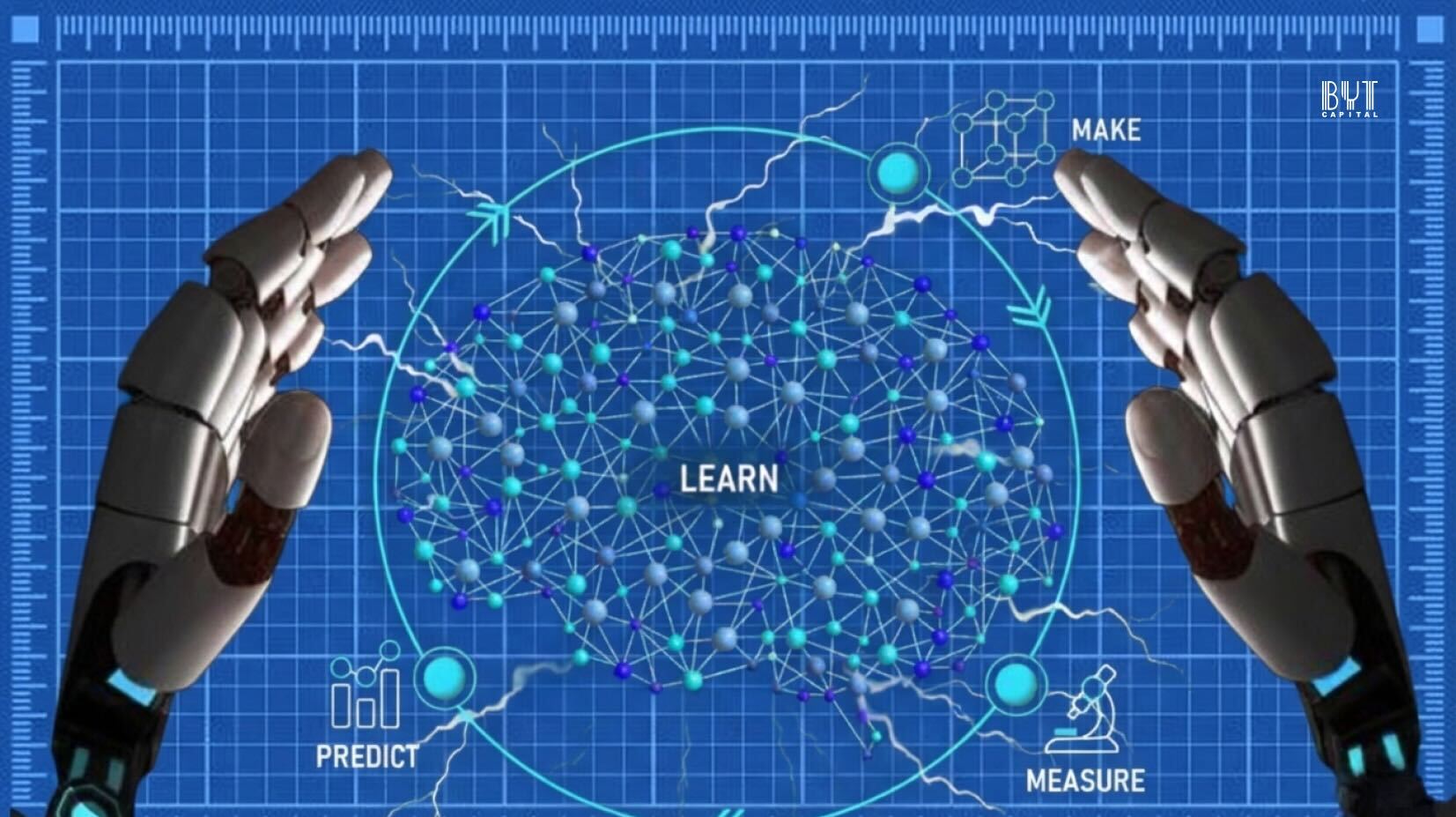
Imagine designing a super-strong battery that lasts far longer per charge or a semiconductor chip that runs cooler and faster than anything today. These are no longer just ideas. AI-powered materials discovery is increasingly helping researchers narrow down promising candidates before they ever enter a lab.
Traditional discovery often relies on iterative lab synthesis and testing, plus physics-based simulation, with many candidate materials not meeting the target requirements on the first pass. AI changes the workflow by predicting how new materials may behave before anyone builds them, so experiments can be prioritized and cycles can be shortened.
This guide explains the basics step by step, connecting core concepts to real-world impact.
The old way: why material discovery was slow
Materials are everywhere, in phone screens, batteries, chips and solar panels. But discovering new ones is hard. Scientists start with candidate crystals or compounds, tweak compositions and structures and measure properties such as conductivity, stability, strength or energy storage performance. Each iteration can require synthesis, characterization and computation and progress can be limited by time, cost and the sheer size of the search space.
Large open resources help, but they are still a small slice of what is chemically possible. For example, the Materials Project provides computed data on 150,000 plus materials, built over many years of community effort.
A major bottleneck is data and complexity. Materials are not flat lists of features. They are three-dimensional atomic structures where local environments and bonding patterns strongly shape properties. This is where AI becomes useful: it can learn patterns from existing data and propose which new candidates are worth testing next.
AI enters the lab: from data to smart predictions
AI in materials works like a screening engine. It learns relationships between structure and properties from datasets, then predicts properties for untested candidates.
A headline example is DeepMind’s GNoME system. DeepMind reported that it generated predictions for 2.2 million candidate crystal structures and identified about 380,000 as stable, a scale they described as roughly “800 years' worth of knowledge” in comparison to the historical discovery pace.
These are computationally proposed structures. They still require experimental validation to become usable materials, but AI helps decide where to look first.
A key enabler is machine learning models trained to predict properties like band gaps or elastic response. The challenge is that high-quality labeled data for many properties is limited and measurements can vary across labs and methods. Modern approaches use architectures and training strategies designed to learn more from the data that exists.
Graph neural networks: seeing materials as atomic maps
A crystal can be represented as a graph. Atoms become nodes. Bonds and neighbor relationships become edges. Graph neural networks or GNNs, operate naturally on this representation and can capture how local atomic environments influence global properties.
In practice, you feed a crystal structure into a GNN. The model updates atom-level representations by passing messages across neighbors, then aggregates the information to predict properties.
One reported result on Materials Project style data shows R² values around 0.96 for density, 0.97 for formation energy and 0.76 for band gaps. These are correlation-style fit metrics, not “percent accuracy,” and performance depends on dataset choices and task definitions.
Transfer learning: teaching AI with what it already knows
Many materials datasets are small. Transfer learning helps by first training a model on a larger related dataset, then fine-tuning it for a specific property or domain.
An IISc Bengaluru-led team with University College London demonstrated transfer learning and multi-property pre-training approaches for predicting properties of materials, including generalization to out-of-distribution cases such as two-dimensional materials.
Instead of claiming that models need millions of samples, the more accurate statement is this: GNNs often benefit strongly when dataset sizes are large, commonly on the order of ten thousand datapoints or more and transfer learning helps when datasets are smaller.
Multi-property pre-training: predicting more than one thing
Instead of training separate models for each property, multi-property pre-training trains a single model across multiple properties. Shared representations can help the model learn more general structure patterns.
In the IISc UCL work, datasets ranged from 941 to 132,752 samples across tasks, highlighting why pre-training can matter when some properties are scarce.
Tools and systems: composition to properties
A related direction is composition-based property prediction tools that let users input a formula and obtain predicted properties quickly.
For example, MPpredictor is described as an AI-driven web tool that can predict up to 41 material properties from composition.
Real-world wins: chips, batteries and more
Semiconductors
AI models can screen candidate semiconductors by predicting band gaps and related descriptors relevant to electronic performance. This kind of capability is increasingly relevant given India’s semiconductor program scale, often described as ₹76,000 crore under the Semicon India initiative.
Energy storage
Solid-state batteries require electrolytes with high ionic conductivity and stability. AI-based screening is used to accelerate the search for candidate electrolytes and interfaces. DeepMind’s stable crystal set includes many candidates that could be explored for energy applications, though each still needs lab validation.
Solar cells
Perovskites are a major target. Perovskite tandem solar cells have crossed 30% plus efficiency in research records, while single junction perovskites are lower. The best research cell efficiency chart is the standard reference for this.
Battery management
AI is also used outside discovery, for example, in battery state-of-charge estimation. Some studies report errors below 0.1% under specific test setups, but this is not a universal number and depends heavily on data, model and evaluation method.
Other fronts include catalysts for CO2 conversion, lightweight insulators and materials for thermal management, where ML can prioritize candidates for simulation and lab testing.
Challenges: data droughts, physics gaps and what helps
AI is powerful, but it is not magic. Data can be incomplete, noisy and fragmented across proprietary silos. Models can overfit or fail to extrapolate to new chemistry.
What helps in practice:
- Hybrid approaches that combine ML with physics-based simulation, such as DFT
- Architectures built for scientific structured data, not generic images
- High-throughput labs and automation to generate data faster
- Open datasets and shared benchmarking to improve reproducibility
India’s role and global momentum
India’s research ecosystem, including IISc and other leading institutes, is contributing to transfer learning and multi-property approaches that are useful when datasets are limited. Globally, systems like DeepMind’s GNoME and composition-based predictors like MPpredictor show how far scale can push discovery pipelines.
The horizon: AI as materials co-creator
AI is moving from prediction to proposal. Generative models can propose candidates that optimize multiple objectives and automation can close the loop by synthesizing and testing what AI suggests.
Rather than making hard forecasts, the safe takeaway is this: the more we connect AI screening, physics simulation and automated experimentation, the faster materials discovery can become.
This is how the field connects atoms to applications and why materials innovation is increasingly becoming a software-assisted process, not only a lab-bound one.

Get a front-row seat to India’s deep-tech innovation
Receive the best of BYT’s analysis and updates, straight to your inbox